

a tantric Shakespeare
Chloé Zhao's Hamnet with Jessie Buckley and Paul Mescal

Paul Mescal found yet another role to seamlessly fit his aesthetic, which is casting curation at its best. From Normal People on, Paul Mescal has found All of Us Strangers, Gladiator and Aftersun to show his mini mullet, earring, muscular arms and just a sprinkle of queer ambiguity. His upcoming movie The History of Sounds promises more of that, even when the period of the movies (around 1917) I think men’s hair was generally combed back.
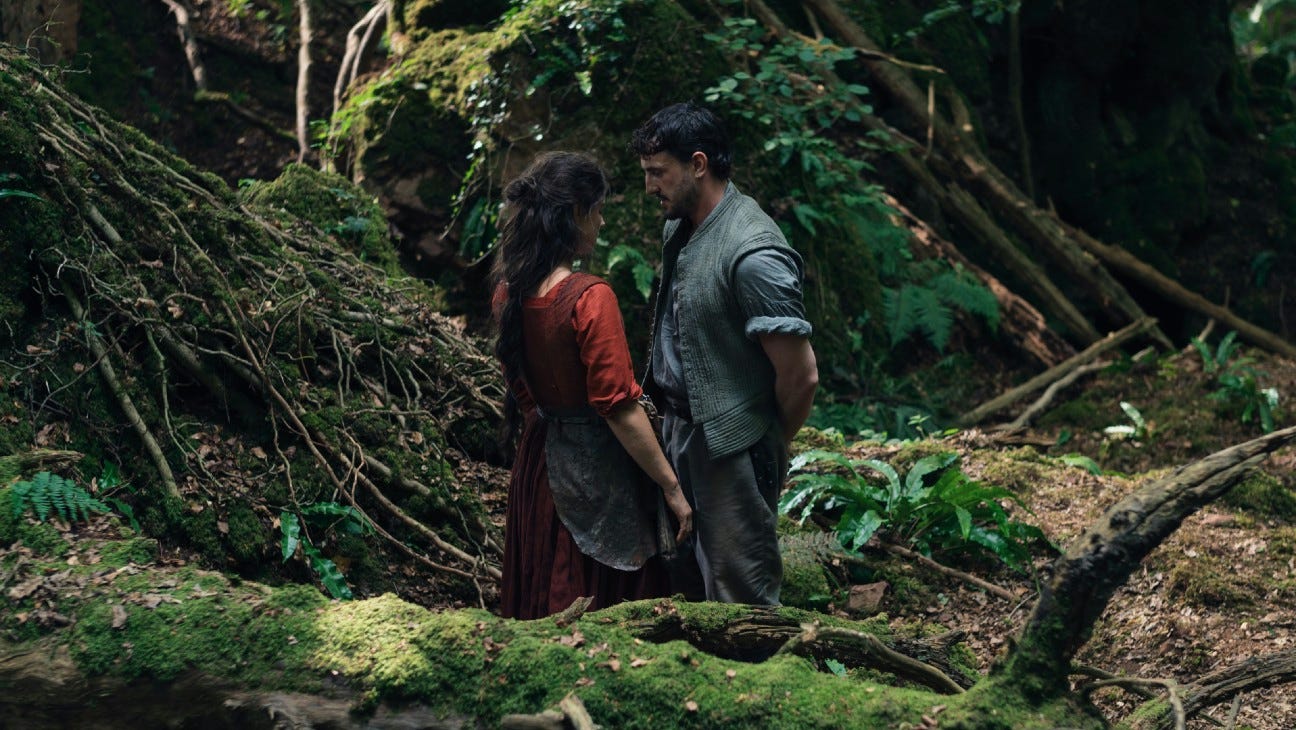
Don’t get me wrong. I’m not complaining. I love Paul Mescal. I also really loved reading Hamnet by Maggie O’Farrell and I love that Chloé Zhao made a movie adaptation of the novel. It centers Agnes, a woman who breathes the forest and heals with her hands, while her husband (the one whose name we usually lead with) is a mere satellite, a sensitive, troubled boy-genius drifting in the background.
So as you do when you’ve finally encountered something that made you feel something, I did a deep dive and read and watched press tour interviews. The more I consumed, the more I questioned what in binary hell is going on?
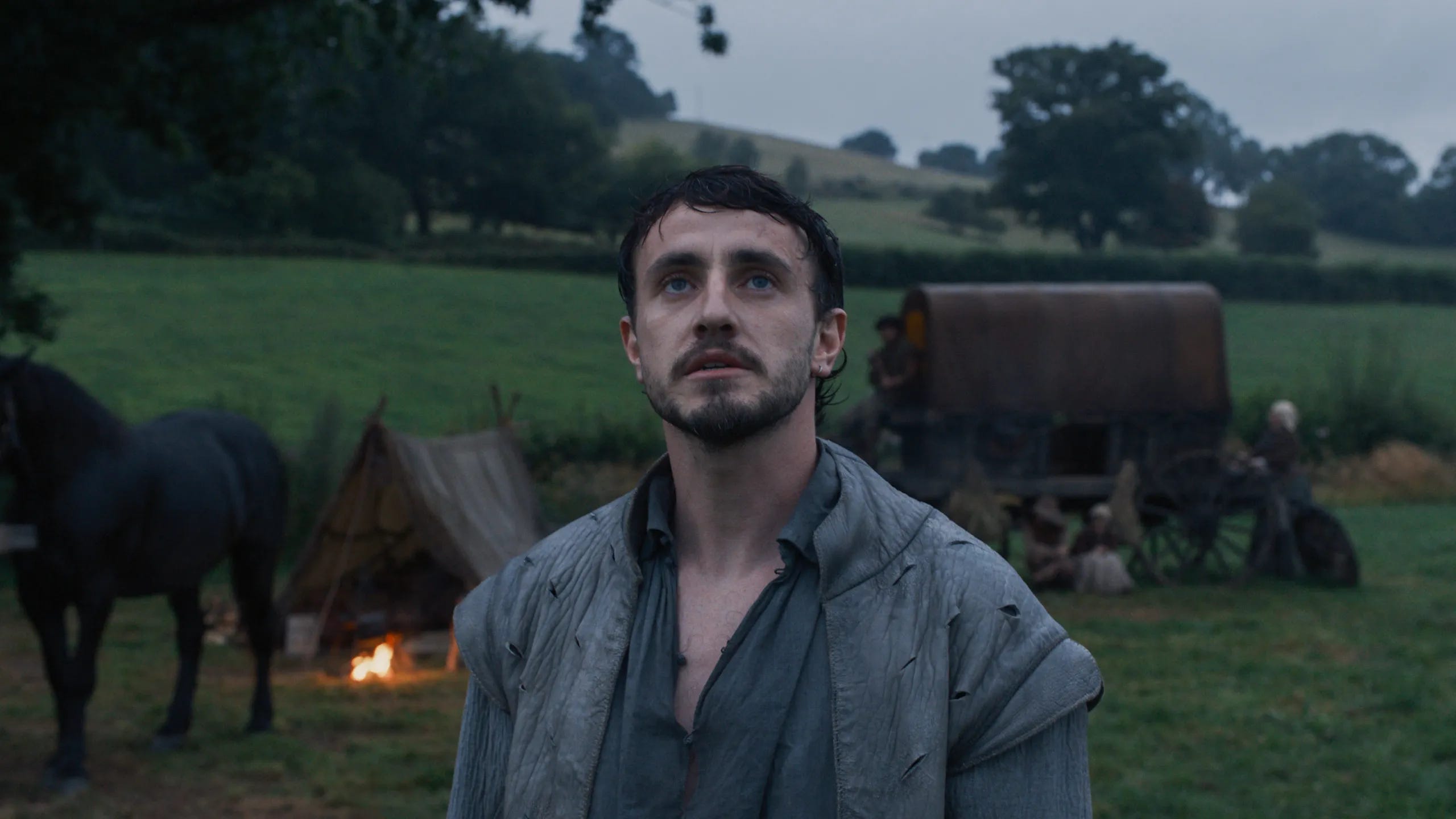
In a video for Vanity Fair I’ve heard director Chloé Zhao and actors Jessie Buckley and Paul Mescal talk about how they did a Tantric Polarity workshop to get Mescal being the most extreme masculine and Buckley the most extreme of feminine. Zhao is a tantric practitioner and talks about how the feminine is chaotic and expressive and and masculine is the “container, the banks of a river” which results in that his stability will allow her to fully surrender to her emotions.
The choice of words and focus on the severe distinction between the masculine and the feminine made me anxious. The production started to sound like a tradwife manifesto by way of a Coachella wellness tent.
Then I hear Paul Mescal talking about his costumes for the movie and connecting it with the inner life of his character: “I don’t want to play him like a cerebral, heady person, I want him to feel like animalistic and fundamentally masculine” What makes someone just that? Apparently rolling up the sleeves of your shirt, wearing layers, having your clothes come undone and putting ink on your hands.
What does that even mean in 2026? Are we back to “penis owner equals masculine, vulva owner equals feminine”? In one workshop, the actors were apparently asked to “embody” those specific anatomical energies as a somatic exercise. Even Jessie Buckley seemed a bit dazed, later remarking in an interview: “There was an objective overview in my mind like, ‘OK, just surrender to this situation’... but really it was like, ‘What’s going on?’”
Yes, what is going on?
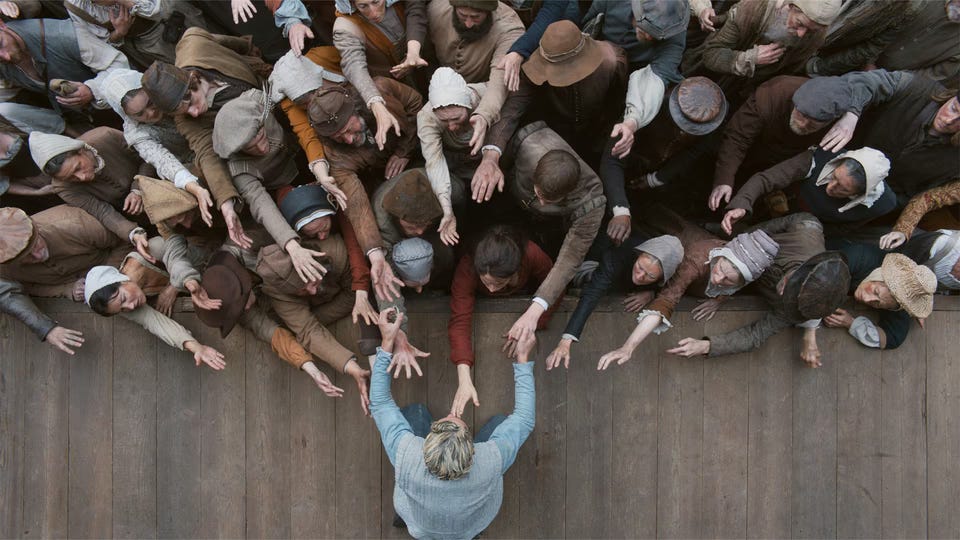
I started to worry that Zhao was pushing an agenda where Will Shakespeare’s “genius” required him to be set free (read: leave his family to go play in London) while Agnes stayed home with the kids because she was the “cyclical, chaotic feminine force.” Zhao even described the creative process in these terms: the feminine is the spiral, chaotic part of filming; the masculine is the linear, “get shit done” energy of production.
It felt reductive. A bit dusty.
But then, I dug deeper. I found a different interview where Zhao explains her fascination with Carl Jung and the “inner civil war” we all carry. She spoke about the “masculine tyrant” we’ve internalized through patriarchy, but more importantly, about the “locked-away feminine side inside men.”
She said: “More than ever, men need women to see the wounded boy inside them. If we don’t do that, then we are fucked.”
And suddenly, the “binary hell” started to look more like a bridge.
The terminology—masculine and feminine—is baggage. It’s heavy, it’s gendered, and it’s often used to keep us in boxes. But if you strip the labels away, you’re left with what some therapists call the Alpha and the Omega. The Alpha is the container, the strategy, the logic. The Omega is the being, the feeling, the chaos.
We all have both. A trans person who is a chronic people-pleaser might be “too Omega,” needing to find the “Alpha” pleasure of taking control. It’s not about what’s in your pants; it’s about the balance of your internal forces.
I watched a clip that focuses on Tibetan tantra, where the roles are actually reversed: the female energy is the form and the activity, while the male energy is the receptive void. It’s not about “man vs. woman.” It’s about the union of all energies.
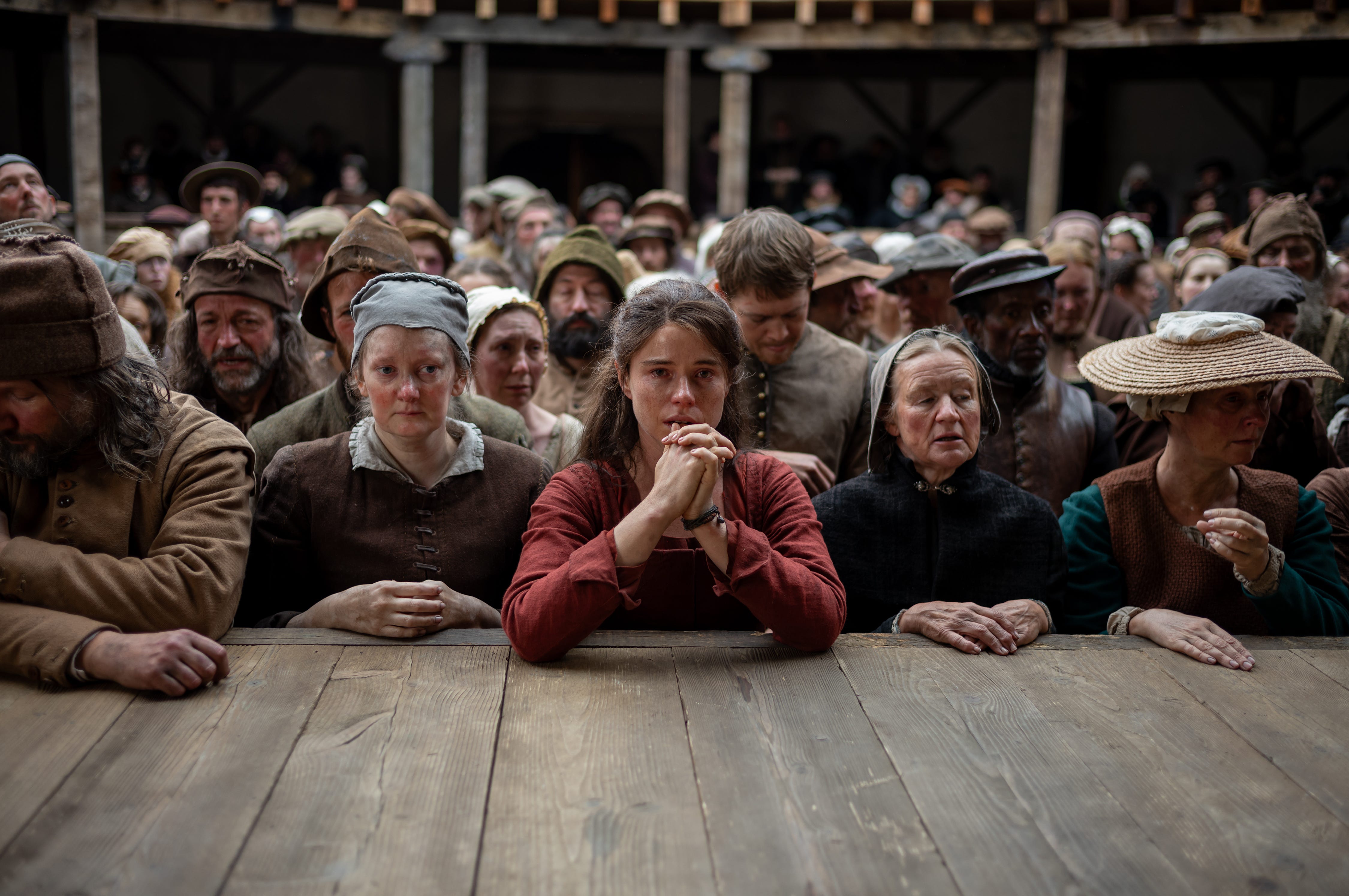
Maybe that’s what Zhao was actually hunting for in those workshops. Not a return to 1950s gender roles, but a way to get Paul Mescal and Jessie Buckley out of their head and into their body. To move from control to surrender.
It’s uncomfortable to talk about gender in such essentialist terms. But if the end goal is to stop the “inner civil war” and actually connect—with ourselves and each other—then maybe rolling up your sleeves and feeling the “animalistic” isn’t such a bad place to start.
Even if it does feel a bit binary until you get there.